
Description
Product Overview
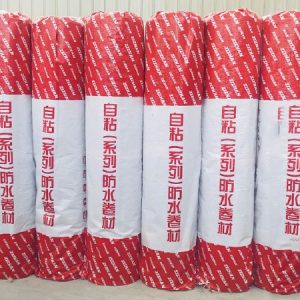
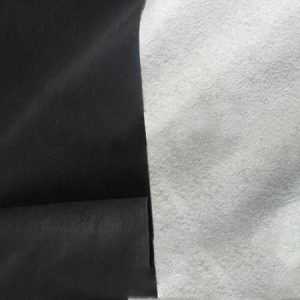
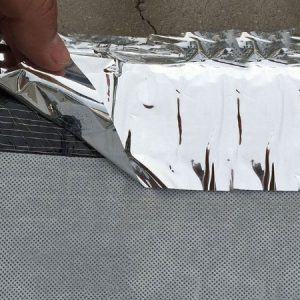
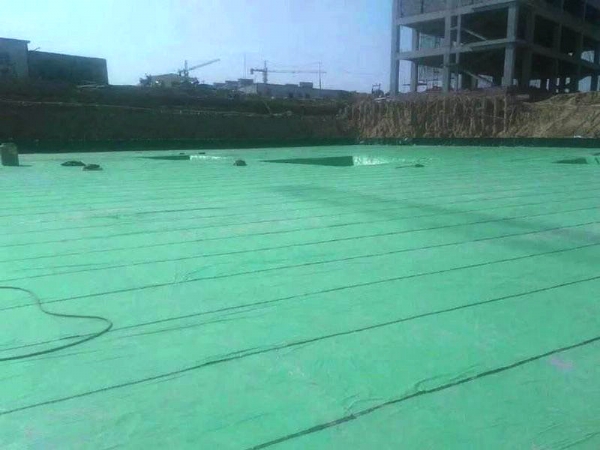
The strong cross‑laminated film reactive polymer self‑adhesive waterproofing membrane consists of a polymer sheet, a self‑adhesive rubberized asphalt compound, and a release film. A fabric reinforcement may also be chemically bonded to the polymer sheet as required. This membrane combines the advantages of both self‑adhesive membranes and polymer waterproofing membranes, greatly improving puncture resistance, self‑healing, weather resistance, high‑ and low‑temperature performance, as well as offering superior chemical properties and stable physical performance. It comprises a specially formulated strong cross‑laminated polymer base film, a moisture‑curing specialty adhesive that can self‑heal small punctures and reacts with liquid cement slurry, and a release film (double‑layer release film on both sides). The long side of the membrane is provided with a 100 mm wide lap edge for joint sealing.
Product Features
(1) New wet‑laying technology: The wet‑laid waterproofing membrane bonds permanently with the structural layer, eliminating the risk of water channeling in between. Even if the membrane is locally damaged, water ingress is confined to a very small area, greatly improving the reliability of the waterproofing system. Repair is easy.
(2) The waterproofing performance is not affected by settlement of the main structure, effectively preventing groundwater infiltration.
(3) Wet bonding technology: When concrete is poured, the membrane and the cement slurry bonding layer undergo a moisture‑curing reaction through a special polymer. By the time the concrete reaches initial setting, the adhesive layer of the membrane has completely moisture‑cured and merged with the concrete surface to form a new waterproofing layer.
(4) Wet‑laid construction requires no leveling layer, has low requirements for the substrate, and is not affected by weather or substrate dampness. It offers unique advantages for rainy‑season construction and tight schedules.
(5) Reinforced concrete can be poured directly over the membrane without a protective layer.
(6) The special moisture‑curing reactive polymer adhesive does not require external force; even if the substrate surface is uneven, as long as it contacts cement slurry, a strong bond is formed.
(7) The specially formulated strong cross‑laminated film offers excellent tensile strength, tear resistance, and impact resistance. With an additional self‑healing protective layer, the membrane exhibits unique puncture resistance and self‑healing after puncture, making it suitable for construction operations such as rebar tying directly on the waterproofing layer.
(8) Strong chemical corrosion resistance: excellent resistance to alkaline water from concrete, unaffected by household waste or biological attack, mold‑proof, and corrosion‑resistant.
(9) The specially formulated strong cross‑laminated film is dimensionally stable, puncture‑resistant, low‑temperature resistant, and UV‑resistant. Therefore, even if the membrane surface is left without any protective measure after installation, it does not age easily.
(10) Cold application – no open flame, non‑toxic, odorless, no environmental pollution, and no fire hazard. Safe and environmentally friendly.
The reactive bonding strong cross‑laminated polymer wet‑laid waterproofing membrane bonds permanently with the concrete structural layer, eliminating the risk of water channeling. Even if the membrane is locally damaged, the damage is essentially blocked by the concrete structure. Thus, even an imperfect membrane layer and an imperfect concrete structural layer together form a perfect waterproofing system, greatly enhancing the reliability of the waterproofing layer.
Scope of Application
-
Roof and basement waterproofing for industrial and civil buildings
-
Bottom slabs and exterior walls of sunken roads
-
Open‑cut and mined tunnels
-
Bottom slabs and exterior walls of subway stations
-
Other waterproofing structures using external waterproofing with internal application (outside‑in)
Construction Procedures
Pre‑applied Reverse Bonding Method (Loose Laying)
-
Substrate preparation: Before waterproofing construction, remove any protrusions and clean the substrate thoroughly.
-
Lay the membrane: Loosely lay the membrane onto the cushion layer.
-
Joint lapping:
-
For long‑side laps: Remove the release film from the lap edge, apply pressure to bond. If necessary, apply gentle heating before lapping.
-
For short‑side laps of single‑sided self‑adhesive membranes: Use butt joints. Remove the release film from the butt joint area and apply a double‑sided self‑adhesive sealing strip, then press firmly.
-
-
Remove the top release film: Remove the release film from the top surface of the membrane. If needed, sprinkle dry cement powder on the membrane to facilitate subsequent work.
Wet‑laid Method
-
Substrate preparation: Before waterproofing construction, remove any protrusions and clean the substrate thoroughly. Moisten with water, but no standing water.
-
Prepare cement slurry: Use water at ambient temperature with a water‑cement ratio of approximately 0.4. Adjust according to temperature and substrate moisture if necessary. Sand may be added to make mortar. Roll‑apply the prepared cement (or cement‑sand) slurry onto the substrate. At inside corners, use cement mortar to form a rounded corner with a radius R = 50 mm.
-
Lay the membrane: Remove the release film (paper) from the membrane surface. Lay the membrane flat onto the cement mortar or cement paste. Adjacent membrane sheets are butt‑joined; the butt joint gap should be controlled between 0–5 mm. Alternatively, overlap joints can be used. Laps between upper and lower sheets and between adjacent sheets shall be staggered. The lap width for both long and short sides is 60 mm.
-
Expel air and bond: Use a wooden trowel or rubber pad to pat the top surface of the membrane, lifting slurry and expelling air from underneath, so that the membrane bonds tightly with the cement mortar or cement paste.
-
Seal the joints: Seal butt joints with an additional self‑adhesive sealing strip or sealing tape, width 120 mm. When sealing, first remove the release material from the lap area of the membrane, then apply the additional self‑adhesive sealing strip or tape. This step is not required when overlapping method is used.
Storage & Transportation
-
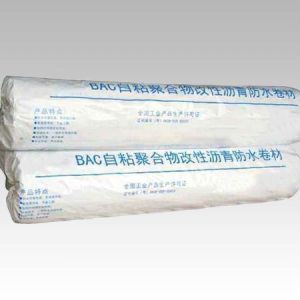
The strong cross‑laminated film reactive self‑adhesive waterproofing membrane shall be stored in a dry, ventilated environment, protected from sunlight and rain.
-
During transport and storage, different types and specifications of products shall be stored separately, not mixed, and protected against tilting or lateral pressure.
-
Stack height shall not exceed 5 layers.
-
Storage temperature shall not exceed 45°C. Under normal storage and transport conditions, the product shelf life is 1 year.