
Description
Product Overview
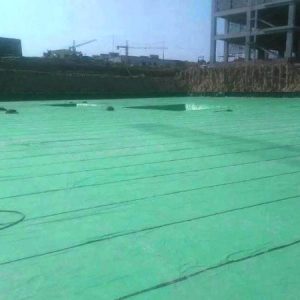
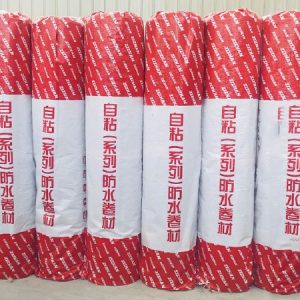
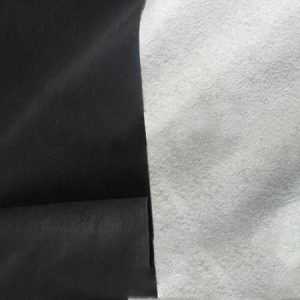
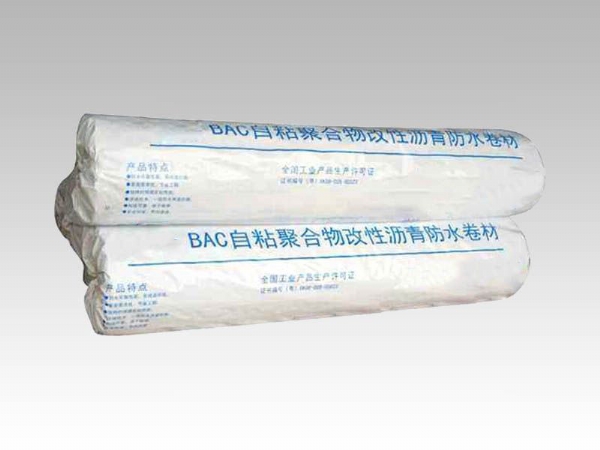
BAC self-adhesive modified polyester waterproofing membrane is a new‑type waterproofing membrane composed of a reinforced carrier, high‑quality modified bitumen compound, and a self‑adhesive compound containing CaSiO₃. Its unique polymer component can adhere to cement mortar or cement paste, as well as bond with subsequently poured concrete, generating strong adhesion. The membrane is applied using the wet laying method, where the self‑adhesive compound penetrates and interlocks with the unhardened cement hydrates, forming a continuous mechanical bond that permanently seals onto the cementitious component, ultimately creating a “skin‑type” waterproofing layer.
Product Specifications
Thickness: 1.5mm, 2.0mm, 3.0mm, 4.0mm
Width: 1.0m – 2.0m
Product Features
-
Convenient application & shorter construction time – Higher construction efficiency; can be applied directly on damp substrates.
-
Reliable bonding & prevention of water channeling – The membrane permanently bonds with the structure, completely eliminating a water channeling layer and forming a reliable “skin‑type” waterproofing system.
-
Pre‑applied bonding – Bonds integrally with subsequently poured concrete, remaining inseparable even after long‑term immersion.
-
Safe & environmentally friendly – No solvents or fuels are used during application, avoiding environmental pollution.
Scope of Application
Flat roofs, sloped roofs; basement bottoms (mats), side walls, roof slabs; tunnels, etc.
Technical Performance Standard
Complies with GB 23441‑2009
Construction Process & Method
Substrate Preparation
Repair and level the substrate; internal and external corners should be rounded. The substrate may be damp but free of standing water.
Construction Procedure
-
Substrate cleaning & moistening
-
Applying cement (waterproof) mortar
-
Reinforcement of joints/details
-
Laying BAC waterproofing membrane
-
Troweling / expelling air
-
Sealing lap joints
-
Quality acceptance
Construction Method
-
Substrate cleaning & moistening – Clean the substrate and dampen it with water.
-
Apply cement (waterproofing) mortar – During laying, compact and smooth the mortar. At inside corners, form a radius of at least 50mm. Spread the cement mortar 100–300mm wider than the length and width of the membrane, ensuring a flat surface.
-
Reinforcement of details – Reinforce joints and detail areas according to specification requirements.
-
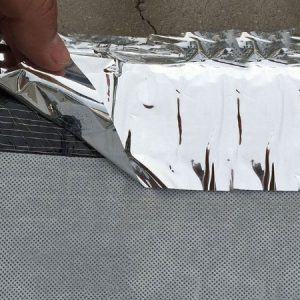
Laying BAC membrane on main surfaces – Remove the release film from the bottom surface of the BAC membrane and lay the membrane onto the cement‑mortar‑coated substrate. Adjacent membrane sheets are butt‑joined; the butt joint should be as tight as possible. (When lapping is used instead of butting, remove the release film from the overlap area on the top surface of the lower sheet, as well as from the bottom surface of the upper sheet, then press the overlap tightly.)
-
Sealing lap joints – Seal the joints with an additional self‑adhesive sealing strip. To seal a butt joint, first remove the release film from the top surface of the joint area, then apply the additional self‑adhesive sealing strip. If the joint area is contaminated, clean it first. (When lapping is used between upper and lower sheets, no additional sealing strip is required; the lap width shall be no less than 60mm.)
-
Applying BAC membrane on vertical walls – Temporarily seal the cut‑off edge of the membrane (e.g., with tape or thickened cement mortar) to prevent excessive moisture loss at the top termination.
Precautions
-
Store rolls flat, not crossed or vertically pressed; stacking height should not exceed 4 rolls.
-
Store in a dry environment, protected from rain and direct sunlight. Shelf life is one year.
-
Before tying reinforcing steel bars or pouring concrete, apply a protective layer or take protective measures over the waterproofing membrane.